Menopause-related dizziness often involves symptoms of lightheadedness, disorientation, unsteadiness, or loss of balance.
Estrogen influences the body’s vestibular system, which regulates physical balance and spatial awareness. As estrogen levels decline, the disruption of these functions may lead to dizziness.
Dizziness can overlap with other common menopausal symptoms, such as vertigo, anxiety, or daytime fatigue from sleep disturbances. In some cases, dizziness may be a sign of an underlying health condition, such as Ménière’s disease or a cardiovascular condition.
A doctor will evaluate a patient’s symptoms and medical history to determine the cause of dizziness. If related to menopause, a combination of lifestyle changes, over-the-counter (OTC) medicines, and/or complementary treatments like hormone replacement therapy (HRT) may be recommended to reduce symptoms and fall risk.
Dizziness During Menopause: Causes, Symptoms, & Relief Strategies
 Erin Marie McCluskey
 Dr. Rebecca Mei-Chia Lee, MD
The Bottom Line:
Between 15% to 20% of adults experience dizziness every year.(1) However, women are affected more often than men. Lightheadedness, disorientation, and unsteadiness are common symptoms during menopause. A study conducted in Japan found that more than 35% of women in perimenopause and postmenopause reported feeling dizzy at least once a week.(2) In addition to disrupting daily life, menopause-related dizziness can increase the risk of falls or dehydration from vomiting. Fortunately, certain lifestyle changes can help manage dizziness in menopause and reduce associated risks.
When does menopause-related dizziness occur?
Dizziness is common during perimenopause, the transitional time between a woman's first irregular period and one year after their final period.(3)(4) This stage typically lasts about three to five years.(5) However, dizziness is not isolated to perimenopause; lightheadedness or feeling like the room is in motion can persist throughout menopause. In the United States, women typically enter menopause around the age of 52, though this can vary depending on genetic, environmental, and sociodemographic factors.(6)(7) Some women may also find that perimenopause dizziness or menopause dizziness occurs in response to certain triggers.
What causes menopause-related dizziness?
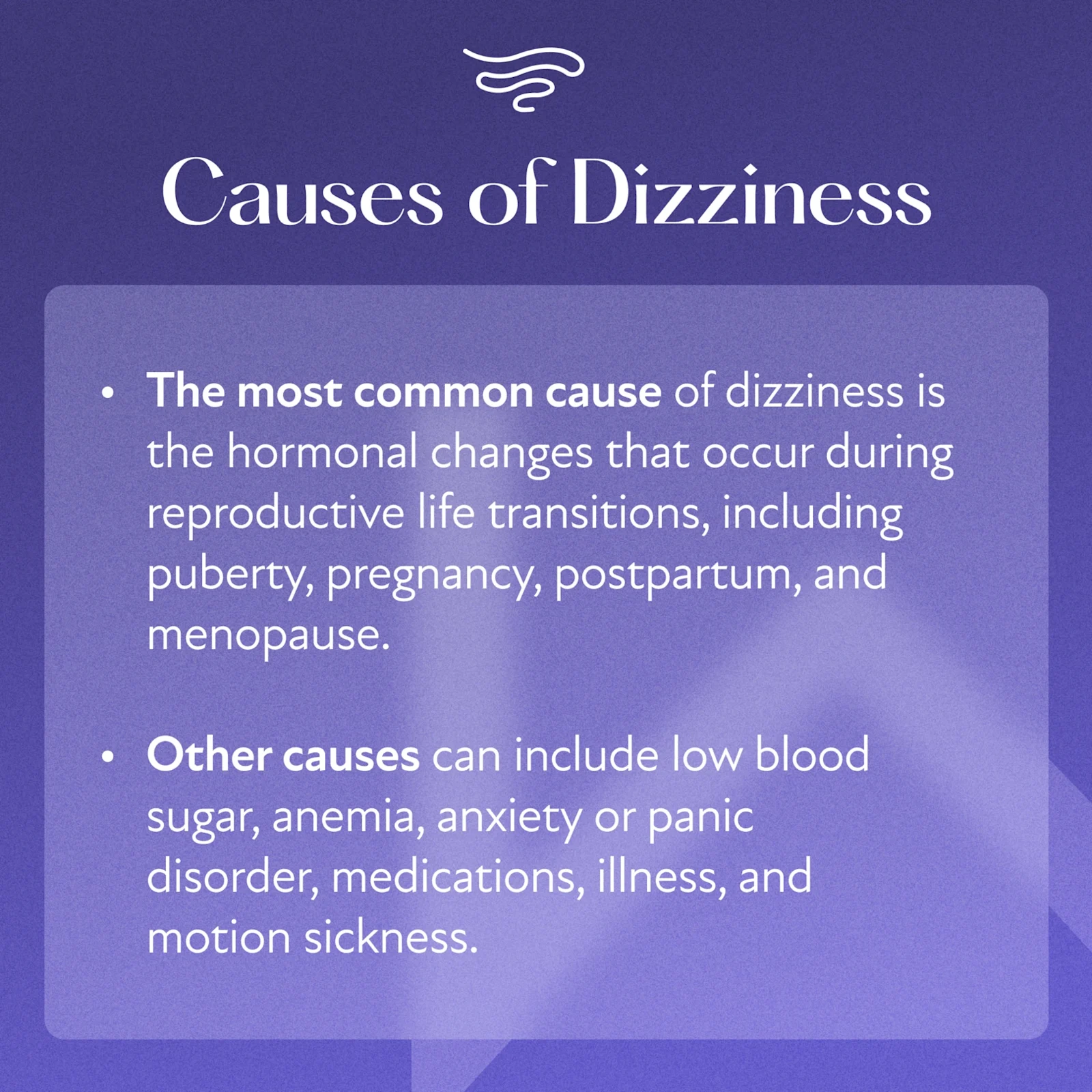
The cause of menopause-related dizziness isn’t entirely understood, but it may be influenced by factors such as the following:
Hormonal Fluctuations: Estrogen is a key player in the body’s vestibular system, the part of the central nervous system responsible for maintaining balance.(8)(9) The drop in estrogen levels during menopause may interfere with balance and spatial awareness, leading to dizziness. Hormonal fluctuations during this time have also been linked with vertigo or spinning sensations due to vestibular dysfunction.(8)(10) The decline in estrogen and progesterone levels may also worsen vertigo symptoms in menopausal women who experience migraines.(8)
Decreased Blood Flow: Changes in blood flow to the brain occur as women go through menopause.(11) One study found that cerebral blood flow decreased in postmenopausal women during sudden hot flashes, which may cause them to feel faint.(12)
Anxiety: Many women experience increased anxiety during menopause. Peri- and postmenopausal women with anxiety may be more prone to dizziness.(2) Researchers also suggest that emotional distress can trigger or worsen vertigo symptoms.(8)
Symptoms of Menopause Dizziness
Menopause dizziness can feel different for everyone. Some women may experience more severe bouts of dizziness, while others may not feel dizzy at all. Common symptoms of menopause dizziness include the following:(2)(8)
Lightheadedness
Feeling faint
Spatial disorientation
Spinning, swaying, or tilting sensations (vertigo)
Feeling off-balance or unsteady
Difficulty concentrating
Finding Relief from Menopause Dizziness
Here are some daily strategies that may help minimize dizziness during menopause:
Staying Hydrated: Hormone fluctuations during menopause may increase thirst, and dehydration can lead to dizziness.(13) Drinking plenty of water each day can help prevent menopause dizziness.
Rising Slowly: Sudden changes in head elevation may trigger temporary vertigo symptoms, known as benign paroxysmal positional vertigo (BPPV).(8) BPPV can affect individuals of any age, though it’s most often seen in people between the ages of 50 and 70.(14) Although the exact cause of BPPV is not fully understood, hormonal changes during menopause may disrupt inner ear function, which helps regulate balance. These bouts of dizziness do not usually last long, but rising slowly from a seated position (or lowering the body gradually into a reclined position) may reduce the likelihood of getting dizzy.
Managing Stress: Journaling, yoga, and meditation are effective stress-reducing activities that can help manage menopause dizziness related to anxiety. Regular exercise can also help reduce stress and improve physical health. Research suggests that physical activity supports the mental well-being of perimenopausal women and other adults in midlife.(15)
Regulating Blood Sugar: People with diabetes undergo treatment to maintain stable blood sugar levels. For those without diabetes, blood sugar levels begin to dip when hungry. Eating regular meals throughout the day during the menopause transition may protect against dizziness caused by low blood sugar from an empty stomach.
Identifying Triggers: Keeping a written or digital log of when dizziness occurs can help identify potential triggers to avoid. Common triggers that may worsen dizziness include certain foods, hot temperatures, and traveling by car, which can lead to motion sickness.
Getting Plenty of Sleep: Lack of sleep can exacerbate dizziness, and many women experience difficulty sleeping during the menopause transition.(16) Keeping the bedroom cool, maintaining a regular bedtime, and moderating caffeine intake can help promote better sleep. If sleep disturbances are caused by symptoms like night sweats or hot flashes, it’s advisable to consult a doctor about treatment options.
Consulting a Doctor: Individuals experiencing dizziness should speak with their doctor, especially if it’s frequent or severe. While occasional dizziness is common, it can also be a sign of a health condition like Ménière’s disease or a heart issue.(17)(18) Dizziness can also increase the risk of dangerous falls. A healthcare provider can help determine the cause of dizziness and rule out any underlying health problems.
Treatment Options for Managing Menopausal Dizziness
The following medications and supplements may help relieve menopausal dizziness:
Hormone replacement therapy may be recommended to manage menopause symptoms. This treatment restores hormones lost during the menopause transition, like estrogen, progesterone, and testosterone.
Ginger is a natural remedy known to help relieve mild nausea, vomiting, and motion sickness symptoms like dizziness.(19)(20) Used by cultures around the world for thousands of years, this plant is believed to offer numerous health benefits. It comes in various forms, like ground ginger, powdered ginger, and ginger tea and is generally considered safe in normal amounts.(19)(21) However, there is no concrete evidence to suggest that ginger is an effective treatment for menopausal dizziness. Most research on ginger’s medicinal properties has focused on its potential benefits for nausea or vomiting in relation to pregnancy. Research findings have also been mixed regarding its effectiveness in relieving motion sickness.
Black cohosh is a supplement commonly used to alleviate menopause symptoms, particularly hot flashes.(22) However, studies on its effectiveness are limited. Due to a lack of consistent evidence regarding its benefits and the potential risk of serious side effects, including liver problems, it’s important to consult a doctor before starting black cohosh or any other medications or supplements.
It’s also important to note that some medications may cause dizziness as a side effect. This includes blood pressure medications like ACE inhibitors, beta-blockers, and vasodilators.(23) Vertigo has also been associated with certain antibiotics and anticonvulsant drugs.(1) Individuals should discuss possible medication adjustments with their doctors to help reduce menopausal dizziness.
Experiencing dizziness during menopause? Discover if HRT is right for you.
If you’ve entered the menopause transition and are struggling with dizziness, you don’t have to suffer in silence. Take our brief menopause quiz to see if you’re an eligible candidate for HRT. Get started with Winona to take the first step toward feeling better.
Frequently Asked Questions (FAQs) About Menopause & Dizziness
Along with hot flashes and vaginal dryness, dizziness is one of the most common symptoms reported by women during menopause. Dizziness may begin during perimenopause and continue throughout the different stages of menopause. Although the exact cause is unknown, menopausal dizziness is believed to be related to hormonal fluctuations, changes in blood flow to the brain, and anxiety.
Individuals should reach out to a healthcare provider if dizziness is severe or persistent to determine if an underlying health condition may be the cause. If someone is experiencing additional symptoms like shortness of breath, fainting, chest pain, or confusion, they should seek medical attention immediately.
A doctor may recommend HRT to relieve menopausal symptoms like dizziness. Other natural strategies for managing menopause dizziness include staying hydrated, minimizing stress, and getting plenty of sleep. Maintaining stable blood sugar levels by eating regular meals throughout the day can also lower the chances of becoming dizzy. When seated or lying down, getting up slowly can help prevent dizziness that may occur from standing up too quickly. Ginger may also offer some relief from motion sickness symptoms like dizziness. Since some prescription drugs can cause dizziness as a side effect, it is recommended to speak to a doctor about potential medication adjustments. Individuals should also check with their doctor before trying any new medications or supplements.
Older adults are more prone to falls, which may be attributed to vision impairment, medication use, or specific health conditions. Securing carpets in place, keeping floors free of objects and wires, and installing nightlights and handrails in areas of the home where falls are more likely can help reduce the risk of fall-related injuries. Wearing flat, non-slip shoes instead of socks or high heels can also help prevent falls caused by dizziness. It’s advisable to consult a doctor about additional risk reduction strategies, which may include balance exercises, dietary modifications, or the use of a cane or other walking support.
This article is for informational purposes only and does not constitute medical advice. The information contained herein is not a substitute for professional medical advice. Always talk to your doctor about the risks and benefits of any treatment.
References
Dizziness in peri- and postmenopausal women is associated with anxiety: a cross-sectional study
Vestibular migraine may be an important cause of dizziness/vertigo in perimenopausal period
Balance in Transition: Unraveling the Link Between Menopause and Vertigo
Brain blood flow and cardiovascular responses to hot flashes in postmenopausal women
Hormonal Changes During Menopause and the Impact on Fluid Regulation
Physical Activity and Health During the Menopausal Transition
What is Ménière's Disease? | National Institute on Deafness and Other Communication Disorders
Clinical Evaluation of the Use of Ginger Extract in the Preventive Management of Motion Sickness
Herbal Medicine: Biomolecular and Clinical Aspects. 2nd edition.
Older Adults and Balance Problems | National Institute on Aging
Six Tips To Help Prevent Falls | National Institute on Aging