Irregular periods in perimenopause reflect fluctuating estrogen and progesterone, which alter ovulation and the stability of the uterine lining.
Hormonal shifts also influence cholesterol patterns, vascular tone, and insulin sensitivity — all of which gradually evolve during the menopause transition.
Risk is shaped by individual variables like age, smoking status, blood pressure, migraine history, body composition, and underlying metabolic health, particularly when hormonal therapies are considered.
Earlier findings from the Women’s Health Initiative (WHI) raised concerns about hormone therapy and cardiovascular risk, but later analyses clarified that timing, formulation, and patient profile meaningfully impact outcomes.
Clinicians assess bleeding patterns, symptom burden, and cardiovascular risk factors together, using ongoing monitoring to individualize care over time rather than applying a single risk assumption to all women.
Menopause & Irregular Periods: Causes, Signs, & Solutions
 Hailey Kean
 Dr. Saranne Perman, MD
The Bottom Line:
Irregular periods are a common concern for women approaching menopause, particularly those in their 40s, with perimenopause being the likely cause. Studies show that about 65%–74% of women experience a 60-day or longer gap between periods in late perimenopause, indicating significant changes in the menstrual cycle.(1)
This page explores the causes of irregular periods, identifies key symptoms, and offers strategies to help manage and regulate menstrual cycles effectively.
When are periods considered irregular?
A regular menstrual cycle typically falls within a 28-day range, with a variation of up to 7 days considered normal. Periods are classified as irregular when there are significant deviations in cycle length or when periods are missed altogether. This irregularity may come about as more frequent periods, fewer periods, or sudden changes in flow and duration.
Common Causes of Irregular Periods
Hormonal Imbalances
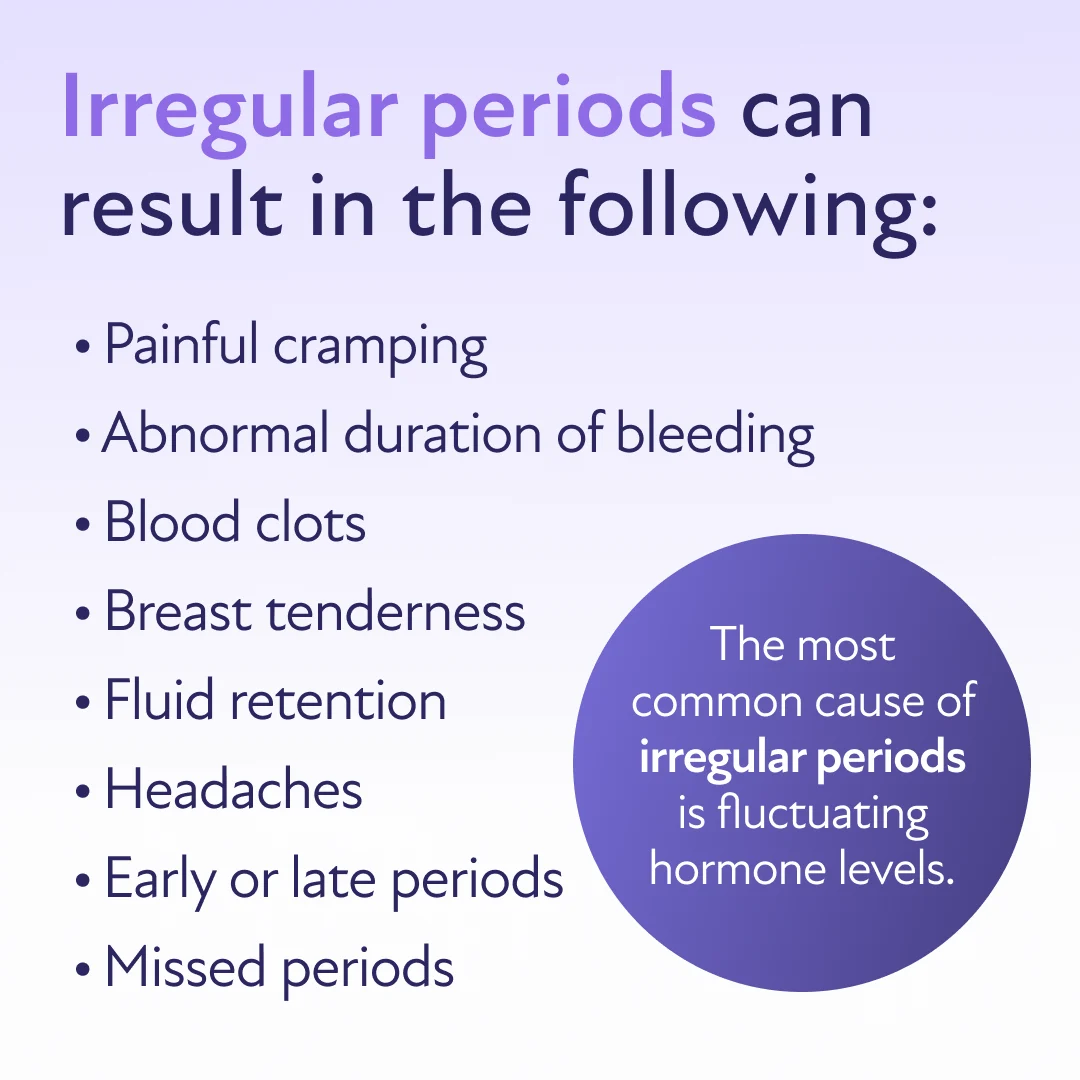
Hormonal fluctuations are a leading cause of irregular periods. Estrogen and progesterone levels can vary due to factors like stress, thyroid disorders, or polycystic ovary syndrome (PCOS), but these fluctuations are not necessarily a sign of the menopause transition.
These imbalances can disrupt the regularity of the menstrual cycle, leading to unpredictable bleeding patterns. However, they can often be a precursor to the first missed period leading up to menopause.(1)(2)
Perimenopause
Perimenopause is the transitional phase leading up to menopause, during which hormonal changes begin to impact the menstrual cycle. For many women, this stage begins in their 40s and is characterized by irregular periods.
Certain Medical Conditions
Medical conditions like uterine fibroids, endometriosis, pelvic inflammatory disease (PID), and certain cancers can contribute to irregular periods. These conditions may also cause abnormal bleeding patterns and should be evaluated by a healthcare provider if persistent abnormalities occur.(3)(4)
Sudden Weight Gain or Loss
Significant weight changes, whether intentional or not, can disrupt hormone levels and lead to irregular menstrual cycles. Maintaining a stable weight through a balanced diet and regular exercise supports hormonal health and menstrual regularity.(5)(6)
Symptoms of Irregular Periods During Perimenopause
Understanding the symptoms of irregular periods associated with perimenopause is crucial for effective management. These symptoms may include the following:(5)(6)(7)
Shorter Cycles: Periods occur more frequently than every 21 days.
Heavier or Lighter Flow: Changes in flow intensity may indicate hormonal fluctuations.
Prolonged Bleeding: Periods last longer than usual. Perimenopause bleeding may last for up to three weeks.
Blood Clots: There is a passage of noticeable clots during menstruation.
Skipped Periods: Missing periods altogether can indicate the approach of menopause.
Spotting or Bleeding Between Periods: Spotting between periods is a frequent symptom during perimenopause.
Additionally, women may experience menstrual cramps without vaginal bleeding, pelvic pain, lower back pain, or other premenstrual syndrome (PMS)-like symptoms during this transition.
Types of Abnormal Bleeding During Perimenopause
Brown Discharge or Spotting: This is often linked to hormonal changes, such as perimenopause brown discharge.
Bright Red Bleeding: This may indicate active uterine shedding.
Watery Bleeding: This can occur as estrogen levels decline.
Spotting Post-Bowel Movement: Hormonal changes may result in more sensitive uterine vessels.
When to See a Doctor for Irregular Periods
Women experiencing irregular periods for several consecutive months should consult a doctor to rule out any underlying medical conditions. Medical advice is particularly important if any of the following symptoms are present:(5)(6)(7)
Heavy bleeding
Unusual discharge
Severe cramps or pelvic pain
Bleeding between periods
Bleeding that lasts longer than three weeks
Managing Irregular Periods During Perimenopause
Several strategies can help regulate the menstrual cycle and alleviate symptoms associated with irregular periods during perimenopause:
Maintaining a Healthy Weight
Eating a balanced diet and engaging in regular exercise can support hormonal health. Weight stability is particularly important in preventing hormonal fluctuations that can disrupt the menstrual cycle.
Managing Stress
Chronic stress is a known disruptor of menstrual regularity. Incorporating relaxation techniques like yoga or meditation can help manage stress levels and promote regularity in the menstrual cycle.
Considering Birth Control
Hormonal contraceptives, including birth control pills, are sometimes used to regulate the menstrual cycle and address issues like heavy bleeding. A healthcare provider can offer guidance on the best options based on individual needs.
Making Dietary Changes
A nutritionist can help tailor a diet to ensure it provides the essential nutrients needed for maintaining hormonal balance. A healthy diet is foundational to overall well-being and can positively impact the menstrual cycle.
Tracking Period Changes
Using period tracking apps or journals to document cycle length, flow intensity, and associated symptoms can help identify patterns and assist healthcare providers in offering tailored recommendations.
Treatment Options for Irregular Periods in Perimenopause
The treatment options for irregular periods during perimenopause can vary based on the underlying cause. A healthcare provider may recommend one or more of the following:
Hormonal Therapy
Hormonal therapy can include progesterone or other medications aimed at correcting hormonal imbalances. These treatments are often effective in regulating the menstrual cycle and managing associated symptoms.
Treating Underlying Conditions
If an underlying medical condition is contributing to irregular periods, addressing that condition is essential for restoring regularity to the menstrual cycle. A comprehensive treatment plan, developed in collaboration with a healthcare provider, can address both the symptoms and the root causes.
Does hormone replacement therapy (HRT) help with irregular periods during perimenopause?
For many women navigating perimenopause, HRT can be a potential solution for managing irregular periods and other symptoms of the menopause transition. HRT can help restore hormonal balance, providing relief from frequent periods, spotting between periods, and other related issues. Women experiencing these symptoms may benefit from discussing HRT with a healthcare provider to determine if it’s the right option for them.
Navigating irregular periods during the menopause transition requires understanding the symptoms, exploring appropriate treatment options, and maintaining an ongoing dialogue with healthcare professionals. It’s important to recognize that while up to 25% of women experience minimal or no changes in menstrual regularity before their final menstrual period, many others face significant irregularities. With the right information, support, and proactive management, women can take control of their health, making this life transition as smooth as possible.(3)
Experiencing irregular periods during perimenopause? Discover if HRT is right for you.
If you’ve entered the menopause transition and are struggling with irregular periods, you’re not alone. Take our brief menopause quiz to see if you’re an eligible candidate for HRT. Get started with Winona to take the first step toward feeling better.
Perimenopause and Irregular Periods: Frequently Asked Questions (FAQs)
On average, women stop having periods around the age of 51. However, the timing can vary significantly depending on individual health, genetics, and lifestyle factors.
Perimenopause usually begins in a woman’s 40s, though it can start earlier or later. The average age for its onset is around 47.
Hormonal fluctuations are the primary cause of periods stopping and starting during perimenopause. The uneven rise and fall of estrogen and progesterone levels can disrupt the uterine lining’s normal shedding, leading to irregular bleeding patterns.
A late period during perimenopause is often caused by declining progesterone levels, which can delay ovulation. Stress, changes in weight, and other health factors can also contribute to delayed cycles during this transition.
Periods typically do not restart once menopause is complete. Any bleeding that occurs post-menopause should be evaluated by a healthcare provider to rule out underlying conditions.
Brown discharge during perimenopause is usually normal and can result from hormonal changes causing the uterine lining to shed incompletely. This discharge often consists of older blood mixed with vaginal secretions. However, if persistent or foul-smelling discharge is observed, it’s crucial to consult a healthcare provider.
Cramps without a period can occur due to hormonal imbalances that affect the uterus, causing contractions without triggering menstrual bleeding. Other potential causes include uterine fibroids, endometriosis, or ovarian cysts, which should be ruled out by a healthcare provider.
PMS during perimenopause can become more intense or unpredictable due to fluctuating hormone levels. Symptoms such as mood changes, bloating, and breast tenderness may feel similar to or more pronounced than in earlier reproductive years.
Blood clots during perimenopause often occur due to heavy menstrual bleeding caused by hormonal fluctuations. As the uterine lining thickens and sheds irregularly, it can lead to larger clots. If clots are frequent and/or accompanied by severe bleeding, a healthcare provider should be consulted.
Symptoms signaling the end of menstruation include irregular cycles, lighter flow, or skipped periods. The final period before menopause can be unpredictable, with significant variations in flow and frequency. Common symptoms include lighter or heavier bleeding, longer or shorter cycles, and increased spotting. Other indicators of approaching menopause may include hot flashes, night sweats, and mood changes.
It’s not uncommon for periods to occur every two weeks during perimenopause due to irregular ovulation and fluctuating estrogen levels. While this can be part of the transition, monitoring the pattern and consulting a healthcare provider is advisable if the issue persists or causes discomfort.
Periods lasting for three weeks or longer during perimenopause should be evaluated by a healthcare provider. Prolonged bleeding can result from hormonal imbalances, uterine fibroids, or other medical conditions that may require treatment.
Irregular periods during perimenopause can last anywhere from several months to a few years, depending on the individual’s hormonal changes and overall health.
This article is for informational purposes only and does not constitute medical advice. The information contained herein is not a substitute for professional medical advice. Always talk to your doctor about the risks and benefits of any treatment.