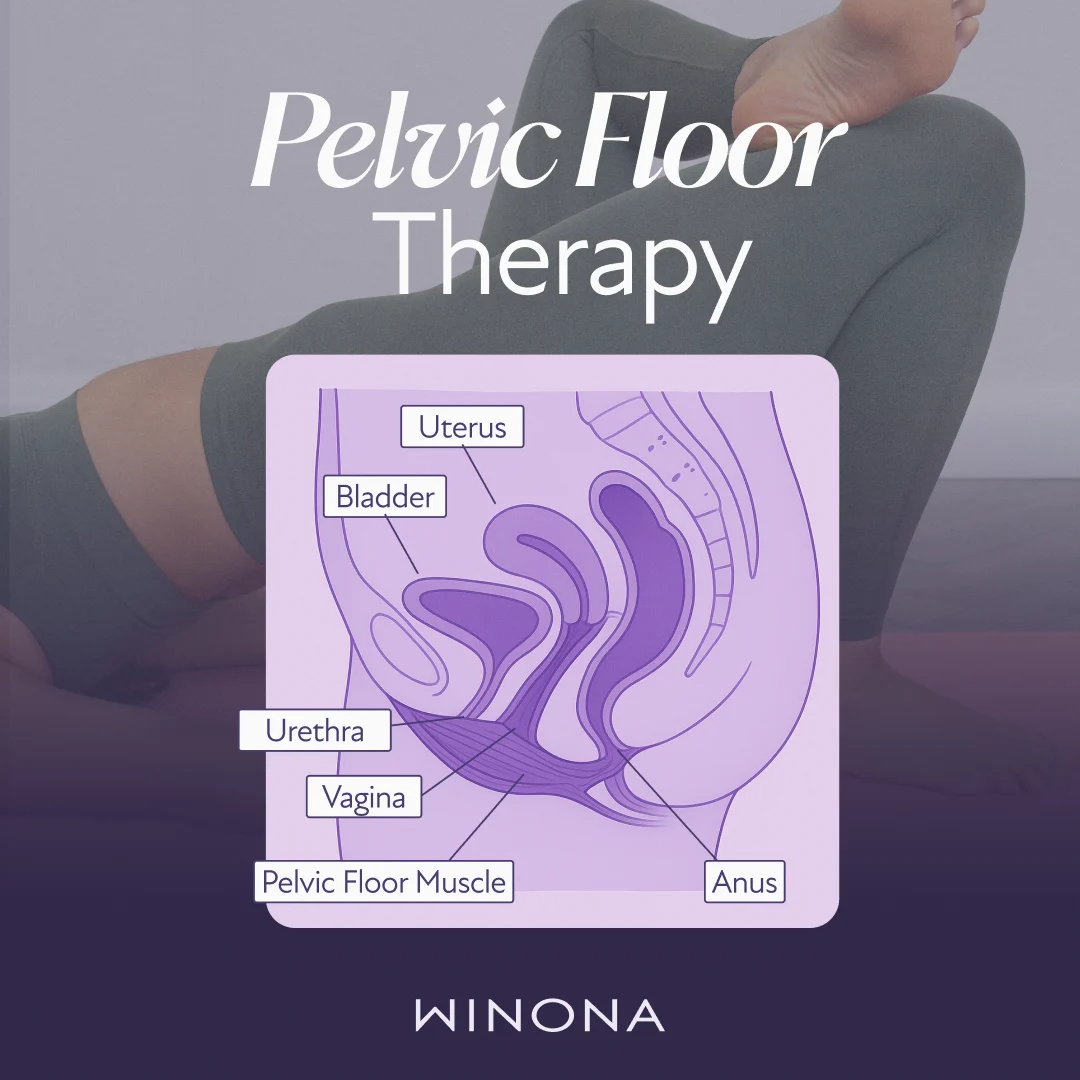
Pelvic floor muscles support the bladder, uterus, and rectum, and their strength and elasticity influence urinary control, sexual comfort, and core stability.
During menopause, declining estrogen reduces tissue elasticity, blood flow, and lubrication, making women more prone to weakened pelvic muscles, urinary leakage, and discomfort during intimacy.
Daily life may involve stress incontinence when coughing or laughing, sensations of pelvic heaviness, or pain during sex — experiences that vary widely between women.
Exercises like Kegels, combined with lifestyle strategies like hydration, fiber intake, stress management, and weight control, can help maintain muscle tone and reduce strain on pelvic structures.
Pelvic floor therapy is viewed clinically as a core component of midlife care, often paired with hormonal support when appropriate, to address both muscle function and tissue health for lasting symptom management.
Pelvic Floor Therapy During Menopause
 Hailey Kean
 Dr. Saranne Perman, MD
The Bottom Line:
For many women in midlife, menopause brings unexpected changes that feel both personal and difficult to discuss. Frequent urination, or leaking urine when sneezing, laughing, or exercising. A sense of heaviness in the pelvis. Pain during intimacy. These symptoms are common, but they are often brushed aside as just another inevitable part of aging.(1)(2)(3)
The truth is, they don’t have to be inevitable — and they are treatable. Pelvic floor therapy (PFT) is one of the most effective first-line treatments for these concerns. By strengthening and retraining the muscles that support the bladder, uterus, and rectum, PFT can help restore control, reduce pain, and improve quality of life.(1)(2)
This guide explains why menopause is such a critical time for pelvic floor health, what specific conditions therapy can improve, and how to start with simple exercises at home. It also outlines what to expect when working with a pelvic floor therapist and how lifestyle choices and hormonal treatments can further support pelvic health.
Why Menopause Is a Critical Time for Pelvic Floor Health
The pelvic floor is a complex group of muscles and connective tissues that forms a supportive structure at the base of the pelvis. It supports the bladder, uterus, and rectum, contributing to core stability, sexual health, and proper organ function. However, pregnancy, childbirth, and menopause all bring hormonal shifts that affect these muscles, leading to discomfort and dysfunction.(1)(2)
The Role of Estrogen
Estrogen plays a central role in keeping pelvic tissues strong and resilient. It supports the following:(1)
Muscle tone by maintaining protein and collagen in muscle fibers
Elasticity of vaginal and connective tissues
Healthy blood flow that nourishes pelvic structures and keeps tissues supple
The Impact of Hormonal Decline
During perimenopause and postmenopause, estrogen levels decline, and the pelvic muscles begin to change.This can lead to the following:(1)(2)
Weakened pelvic floor muscles – reducing support for the pelvic organs
Thinner vaginal tissues and reduced lubrication – increasing discomfort during intimacy and risk of tearing
Loss of ligament elasticity – making organs more likely to shift downward
Changes in bladder function – increasing the likelihood of urinary incontinence
These changes are part of Genitourinary Syndrome of Menopause (GSM), a term that describes the collective vaginal, urinary, and pelvic symptoms linked to low estrogen. Addressing pelvic floor health early can prevent mild symptoms from progressing into more disruptive problems.(1)

What conditions can pelvic floor therapy improve?
Pelvic floor therapy is used to treat several conditions that often emerge or worsen during menopause. Each condition has unique symptoms and benefits from targeted therapy.
Urinary Incontinence (Stress and Urge)
Urinary incontinence is one of the most common pelvic floor concerns during menopause, affecting up to 40%–50% of women in midlife.(2)(3)(4)
Stress incontinence: Leakage during physical stress, like coughing, sneezing, laughing, or lifting
Urge incontinence: A sudden, intense need to urinate, sometimes followed by leakage before reaching the bathroom
How PFT helps: Strengthening the pelvic floor muscles supports the bladder and urethra, improves closure of the urethral sphincter, and helps restore bladder control. Techniques like biofeedback and bladder training also help women maintain healthy bladder habits.
Pelvic Organ Prolapse (POP)
Pelvic organ prolapse occurs when pelvic structures — such as the bladder (cystocele), uterus, or rectum — drop into or bulge against the vaginal wall due to weakened muscle support.(1)(4)
Common symptoms include the following:
A sensation of heaviness or pressure in the pelvis
A visible bulge at the vaginal opening
Difficulty fully emptying the bladder or bowels
Low back pain or pelvic discomfort after standing
How PFT helps: While advanced prolapse may require surgical intervention, pelvic floor therapy can help slow progression, reduce discomfort, and improve everyday function by strengthening supportive muscles.(1)(4)(5)(7)
Painful Sex (Dyspareunia) and Vaginal Dryness
Declining estrogen can cause thinning of vaginal tissues, reduced natural lubrication, and increased tension in the pelvic floor muscles. These changes may result in the following:(1)(4)
Pain or burning during intercourse
Vaginal dryness or irritation
Muscle spasms in the pelvic floor
How PFT helps: Therapy improves blood flow to vaginal tissues, improves muscle control and relaxation, and reduces tension that contributes to pain. When combined with localized estrogen treatment, many women report significant improvements in comfort and intimacy.(1)(2)(4)(5)
How to Do Pelvic Floor (Kegel) Exercises: A Step-by-Step Guide
Kegel exercises are the foundation of pelvic floor therapy. Research shows that women who practice them consistently can see improvements in urinary leakage, prolapse symptoms, and sexual function within 8–12 weeks.(3)(5)(6)(8)
Step 1: Finding the Right Muscles
Imagine stopping urination midstream — only do this once to locate the muscles.
Or picture holding back gas. The muscles that tighten are your pelvic floor.
Avoid tightening the stomach, thighs, or buttocks.
Step 2: Perfecting Technique
Lie down or sit in a comfortable position.
Contract the pelvic floor muscles and hold for 3–5 seconds.
Release and rest for 3–5 seconds.
Breathe steadily throughout — inhale before, exhale during contraction.
Step 3: Building a Routine
Do 10–15 repetitions per set.
Complete at least 3 sets per day.
As muscles strengthen, increase the hold to 10 seconds.
Practice during daily activities and in different positions — lying down, sitting, and eventually standing or during activities.
Tip: Results take time. Starting small by holding contractions just a few seconds and gradually building up to 10 seconds is encouraged. Many women notice improvements in bladder control or pelvic comfort after a few months of consistent practice.
Note: NIH and NAFC both stress that stopping urine midstream should only be done once to identify the muscles. Repeatedly doing this can weaken the bladder or cause incomplete emptying.
Home vs. Professional Pelvic Floor Therapy
At-Home Therapy
At home, women can practice the following exercises:
Kegel exercises
Squats and bridges to engage pelvic and core muscles
Pelvic tilts to build awareness of pelvic movement
Benefits: Convenient, free, and accessible — easy to start right away.
Limitations: Some women may struggle to identify the correct muscles, leading to poor technique and slower progress. Also, those with pelvic pain or overactive muscles may worsen symptoms with Kegels and should get a professional evaluation before starting.
Professional Therapy
What to Expect from a Professional Pelvic Floor Therapist
It’s common to feel uncertain about what happens during a pelvic floor therapy session. A pelvic floor therapist — usually a physical therapist with specialized training in pelvic health — works to restore muscle function, ease discomfort, and teach strategies for long-term pelvic support.(2)(6)(7)(8)
A pelvic floor physical therapist provides personalized guidance. Sessions often begin with the following:
A detailed history and discussion of symptoms
An internal and external exam to assess muscle strength and coordination
Therapists may then use tools such as the following:(2)(7)(8)
Biofeedback to show when muscles are activating
Electrical stimulation to encourage contractions
Manual therapy for tight or overactive muscles
Clear communication is an essential part of care. Individuals should feel comfortable asking questions and speaking up if any technique causes discomfort or does not feel right.
Benefits: Higher accuracy, tailored treatment, and faster results
Limitations: Cost, access to specialists, and comfort level with internal exams and treatments
Best approach: Many women benefit from starting with a professional evaluation and then continuing exercises at home for maintenance.
Lifestyle Strategies for Pelvic Floor Health
Pelvic health depends on a mix of factors, including targeted exercises as well as lifestyle options. Simple lifestyle changes can help reduce pressure on pelvic structures and improve long-term outcomes. It’s important to consider the following:
Hydration: Drinking adequate water helps prevent bladder irritation and constipation.
Dietary fiber: Eating enough fiber prevents constipation, which can increase pelvic floor strain.
Mindful bladder habits: Avoiding “just-in-case” bathroom trips prevents training the bladder to hold less.
Stress management: Managing chronic stress reduces muscle tension and can help decrease urinary urgency.
Weight management: Maintaining a healthy weight reduces strain on pelvic organs. Even modest weight loss can decrease incontinence episodes.
HRT for Pelvic Floor Function
While exercises target muscle strength, hormone therapy addresses tissue health.(1)
Systemic hormone replacement therapy (HRT) improves tissue elasticity, muscle tone, and bladder control.
Local vaginal estrogen creams, rings, or tablets restore moisture, reduce irritation, and improve comfort during sex.
Best approach: For many women, a combination of pelvic floor therapy and hormonal support provides the best results. Working with a physical therapist in conjunction with a menopause-trained physician ensures treatment is tailored to individual needs and safety considerations.
Essential Menopause Therapy
Menopause can bring challenging pelvic changes, including incontinence, prolapse, and painful intimacy. But these symptoms are not an unavoidable part of aging. Pelvic floor therapy offers a proven way to restore strength, reduce discomfort, and support long-term pelvic health.
Whether practiced at home or guided by a professional therapist, pelvic floor exercises help women regain confidence and improve daily life. When combined with lifestyle adjustments and, if appropriate, hormone therapy, pelvic floor therapy becomes an essential tool for maintaining well-being in midlife and beyond.
Experiencing pelvic floor issues? Discover if HRT is right for you.
Struggling with symptoms like incontinence or painful intimacy? HRT can address the underlying hormonal causes. Take Winona's brief menopause quiz to see if a comprehensive treatment plan is right for you.
Frequently Asked Questions (FAQ) about Pelvic Floor Therapy During Menopause
Most women notice some improvement within 6–8 weeks of consistent practice, such as fewer leaks or better bladder control. For more significant changes, like reducing prolapse symptoms or improving sexual comfort, it may take 3–6 months. Progress depends on correct technique, frequency, and the strength of the muscles at the start. Patience and consistency are key for achieving lasting results.
Yes. Like any muscle group, the pelvic floor can become overly tight or fatigued if overworked. Doing too many Kegels, or holding contractions for too long without enough rest, can cause muscle tension, pelvic pain, or difficulty fully emptying the bladder. A balanced routine — about 3 sets of 10–15 repetitions per day — is usually recommended. Women experiencing pain or increased urgency should consult a pelvic floor therapist for guidance and adjustments.
Several devices may support pelvic floor therapy:
Biofeedback sensors show when the correct muscles are contracting.
Electrical stimulation devices send a gentle pulse to trigger contractions, which can be helpful if the muscles are very weak.
Vaginal weights or cones provide resistance, making exercises more challenging.
While these tools can be useful, they work best under the guidance of a pelvic floor therapist to ensure safety and correct technique.
Hormone replacement therapy (HRT) can improve pelvic health by restoring estrogen, which supports tissue elasticity, blood flow, and urethral function. Local vaginal estrogen is especially effective for relieving dryness, irritation, and painful sex. Systemic HRT may also help reduce urinary urgency and frequency in some women. However, HRT does not directly strengthen pelvic muscles, so combining it with pelvic floor exercises or therapy provides the most benefit.
This article is for informational purposes only and does not constitute medical advice. The information contained herein is not a substitute for professional medical advice. Always talk to your doctor about the risks and benefits of any treatment.